IEDMS BoD elections (2026)
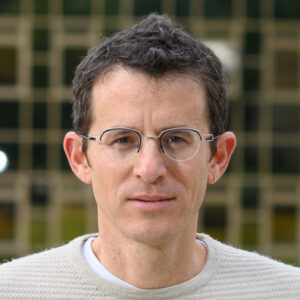
Giora Alexandron
Giora Alexandron is an Associate Professor in the Department of Science Teaching at Weizmann Institute of Science, and head of the Computational Approaches in Science Education (CASEd) Lab. Prior to joining Weizmann, he was a research associate at the Physics Department at MIT.
His research focuses on two main areas: (1) educational NLP, particularly in non-English languages, and LLM Psychometrics; and (2) teacher-AI partnerships, spanning algorithmic foundations, learning engineering, and the role of human factors such as trust in shaping educational users’ adoption of AI systems.
Giora is particularly interested in working in authentic learning environments and closing the loop between EDM research and classroom practice. An AI-powered formative assessment tool for teachers that was designed and implemented in his lab was among the winners of the Tools Competition 2021-22.
Giora served as Program Co-Chair for EDM 2025 and serves on the Editorial Board of the Journal of Educational Data Mining, and as an Associate Editor for the International Journal of Artificial Intelligence in Education.
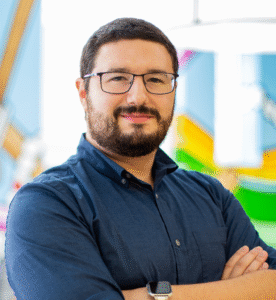
Anthony Botelho
Anthony Botelho is an Assistant Professor of Educational Technology and Computer Science Education in the College of Education at the University of Florida and director of the VIABLE (Versatile Innovations in Affect, Behavior, and Learning Engineering) Research Lab. His research sits at the intersection of artificial intelligence, learning sciences, and educational practice, with a focus on developing human-centered AI systems. His work integrates learner modeling, multimodal learning analytics, natural language processing, causal inference, and participatory design approaches to develop and apply tools and methodologies that are both instructionally meaningful and impactful for scientific discovery.
His current research advances AI-supported systems for assessment, feedback, and collaborative learning, with an emphasis on human-in-the-loop approaches that keep educators central in the interpretation and use of data-driven insights. This work has been supported by both federal and philanthropic agencies and reflects a broader commitment to open science practices and the development of methods and tools that provide broad practical utility. Prior to his role at UF, he worked closely with the ASSISTments digital learning platform through his graduate and postdoctoral training, contributing to large-scale studies of student learning and teacher support.
He is an active contributor to the Educational Data Mining community, serving as Co-Chair for the 2026 EDM conference and acting as a representative of EDM on the Festival of Learning steering committee.
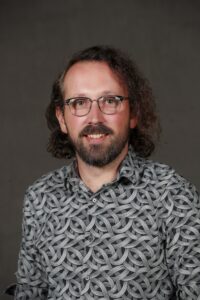
Stephen Hutt
Stephen Hutt is an Assistant Professor in Educational Psychology at the University of Minnesota Twin Cities. His research sits at the intersection of artificial intelligence, learning sciences, and cognitive science, with a focus on modeling engagement, affect, and self-regulated learning in educational contexts. He is particularly interested in how AI can support equitable and adaptive learning experiences while remaining grounded in theory and human-centered design. Stephen serves on the editorial board of the JEDM and was Workshop Co-Chair for the EDM 2025.

Anna Rafferty
Anna Rafferty is a professor of computer science at Carleton College. Her work blends computational cognitive science, computer science, and education, such as building computational models of student knowledge of middle school mathematics and using adaptive algorithms to sequence educational content or personalize interventions. Her recent research has focused on blending the strengths of psychometric assessment models with the flexibility of deep learning approaches. Dr. Rafferty’s work has been published in a variety of venues, including JEDM, Cognitive Science, Learning@Scale, AIED and Nature Human Behavior. She has been an active contributor to the EDM community, including serving as an IEDMS Board Member from 2020-2026, IEDMS Treasurer from 2022-present, one of two Program Chairs for EDM 2020, and an equity, diversity, and inclusion co-chair for the past three years of the EDM conference; she has also been a JEDM associate editor since 2022. In these roles, she has led efforts like developing a conference code of conduct and developing procedures for conference corrections, retractions, and authorship concerns. She is passionate about undergraduate education and increasing access to research for a diverse range of students.
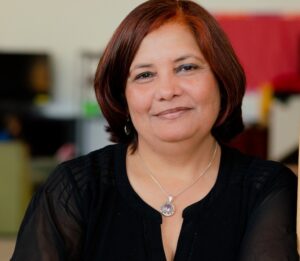
Geeta Verma
Geeta Verma is a Professor of STEM Education at the University of Colorado Denver whose work bridges learning sciences, STEM education, and artificial intelligence to study student learning and success across formal and informal contexts. She has recently contributed to the Educational Data Mining (EDM) community through research on bias-aware deep learning models for micro-credential classification and the use of large language models to examine students’ social and mental health experiences. Her current work develops human-in-the-loop AI approaches to recognize and structure experiential learning, transforming learner-generated data such as reflective narratives into structured evidence aligned with educational frameworks. Her broader scholarship centers on equity, multilingual learners, and innovative learning environments. She is an active scholar who regularly presents at national and international conferences, including keynote and invited talks, and has engaged with the Research in Artificial Intelligence in Science Education (RAISE) Research Interest Group at NARST (National Association for Research in Science Teaching), where she also serves as an ad hoc reviewer. Dr. Verma has served as Co-Editor-in-Chief of the Journal of Science Teacher Education (2019–2024) and as Associate Editor for the Journal of Research in Science Teaching, with research supported by the National Science Foundation and other agencies.