ABSTRACT
To advance Educational Data Mining (EDM) within strict privacy-protecting regulatory frameworks, researchers must develop methods that enable data-driven analysis while protecting sensitive student information. Synthetic data generation is one such approach, enabling the release of statistically generated samples instead of real student records; however, existing deep learning and parametric generators often distort marginal distributions and degrade under iterative regeneration, leading to distribution drift and progressive loss of distributional support that compromise reliability. In response, we introduce the Non-Parametric Gaussian Copula (NPGC), a plug-and-play synthesis method that replaces deep learning and parametric optimization with empirical statistical anchoring to preserve the observed marginal distributions while modeling dependencies through a copula framework. NPGC integrates Differential Privacy (DP) at both the marginal and correlation levels, supports heterogeneous variable types, and treats missing data as an explicit state to retain informative absence patterns. We evaluate NPGC against deep learning and parametric baselines on five benchmark datasets and demonstrate that it remains stable across multiple regeneration cycles and achieves competitive downstream performance at substantially lower computational cost. We further validate NPGC through deployment in a real-world online learning platform, demonstrating its practicality for privacy-preserving research.
Keywords
1. INTRODUCTION
Educational Data Mining (EDM) and Learning Analytics (LA) rely on student-level records such as interaction logs, assessment outcomes, and contextual variables, governed by strict privacy and data-protection regulations. Even after removing direct identifiers, education datasets may remain disclosive because fine-grained behavioral traces and contextual variables enable re-identification or harm [24]. This constraint is evident in the field’s open-science record: A reproducibility audit of LAK proceedings (11th–12th conferences) found that 5% of papers shared raw datasets and 2% reported data available “on request” [18]. A parallel audit of EDM proceedings (14th–15th conferences) found that 15% of papers used or shared open datasets, 5% reported availability “on request,” and most provided no accessible pathway to datasets [17]. Together, these findings indicate a structural constraint on cumulative progress in EDM and LA: The data that power state-of-the-art models are often the least shareable, limiting reproducibility, benchmarking, and cross-institution comparison.
The impact of this constraint is increasing with the rapid uptake of generative AI (genAI), particularly large language models (LLMs) [51], which increases demand for high-quality student datasets, including open-ended responses, code, and dialogue. A recent systematic review of empirical LLM-in-education studies (Nov 2022–Mar 2025) documents rapid deployment while highlighting recurring privacy and governance challenges [40]. Many LLM-based learning supports (e.g., tutor-style feedback and hint generation) are validated on real student work and interaction traces that are difficult to release safely at scale due to re-identification risk [35]. The model-development pipeline introduces additional exposure: Fine-tuning and adaptation rely on sensitive datasets and admit privacy attacks (e.g., membership inference and data extraction), motivating stronger privacy-preserving practices [10]. This tension between data-hungry models and privacy-constrained records makes synthetic data generation compelling for EDM and LA, enabling method development and sharing while reducing reliance on protected student records and motivating the methodology proposed in this paper.
Synthetic data generation for tabular data (SDG-T) provides a practical approach for addressing this constraint. By combining statistical modeling with Differential Privacy (DP) [13] and established privacy evaluation protocols [15], SDG-T constructs artificial datasets that preserve statistical structure without exposing individual records. SDG-T enables privacy-compliant analysis and model development in educational settings. Unlike conventional deidentification, i.e., removing direct identifiers such as names and addresses, which offers no guarantees against reidentification through linkage with auxiliary data, DP is a formal framework that limits how much any single individual’s record can influence released statistics, governed by a privacy parameter \(\epsilon \), where smaller values indicate stronger privacy. A useful property of DP is that any further processing of a DP output remains differentially private at the same \(\epsilon \).
Despite its promise, SDG-T faces a central technical challenge: preserving the empirical marginal distributions of heterogeneous variables. We refer to deviations between real and synthetic feature distributions as marginal mismatch. Educational attributes, such as test scores, attendance rates, or financial aid counts, rarely follow standard parametric families and often exhibit skewness, multi-modality, and discrete mass points.
Deep learning generators, including TVAE [36] and CTGAN [53], optimize joint objectives that prioritize inter-column dependencies, often causing systematic errors like mode collapse [25]. These models can distort individual marginals even when aggregate utility metrics appear competitive. Parametric approaches, such as the Gaussian Copula [44], assume predefined marginal distributions that may not reflect the real data shape. Hybrid methods, including Copula-GAN [34], apply Gaussianization before adversarial training, but still rely on fitted marginal models and do not guarantee exact empirical recovery.
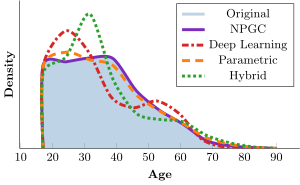
As shown in Fig. 1, existing generators often distort individual feature marginals relative to the empirical data. Deep learning models lack explicit marginal constraints, whereas parametric approaches impose distributional forms that may not reflect the true distribution of the variables. In contrast, NPGC preserves empirical marginals through non-parametric anchoring. Marginal drift can bias downstream analysis; this example reflects behavior observed consistently across datasets in our experiments.
Marginal distortion is further amplified under iterative regeneration. Because synthetic data can be produced at scale [52], subsequent models may be trained on previously generated samples rather than on the original dataset [41]. We refer to this recursive setting as a Synthetic Feedback Loop (SFL). To quantify robustness under SFL, we define regeneration stability as the preservation of statistical structure across iterations. Under repeated regeneration, SFL can produce progressive variance shrinkage and loss of distributional support, consistent with model collapse [1].
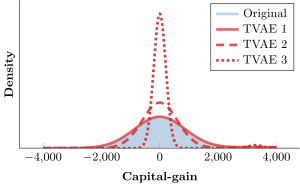
We examine this SFL phenomenon in tabular synthesis. As shown in Fig. 2, unconstrained regeneration leads to systematic deviation from the original distribution across iterations. Such degradation is particularly consequential in educational datasets, where sub-representation of low-frequency groups can bias subgroup analysis and downstream prediction.
To address both marginal mismatch and regeneration instability, we introduce the Non-Parametric Gaussian Copula (NPGC). NPGC enforces exact empirical marginal preservation through non-parametric anchoring while modeling inter-variable dependencies in a Gaussian copula framework. NPGC supports continuous, integer, and categorical variables, and treats missing values as informative signals when estimating marginals and correlations. Beyond private synthesis, NPGC supports data augmentation, where empirical marginal anchoring ensures augmented samples preserve feature distributions, preventing statistical drift and erasure of rare subgroups.
NPGC integrates DP by injecting calibrated noise into both the marginal distributions and the correlation structure, providing formal privacy guarantees. By constraining synthetic generation to respect empirical marginals, NPGC mitigates variance degradation under SFL while maintaining competitive downstream utility and substantially lower computational cost than deep learning–based baselines. While NPGC improves marginal fidelity and regeneration stability, it models dependencies through a Gaussian copula on rank-transformed data. The Gaussian copula is parameterized solely by a correlation matrix and thus cannot represent interactions beyond linear rank correlation; as a result, complex nonlinear or higher-order dependencies may not be fully preserved.
We evaluate NPGC with respect to fidelity, privacy, regeneration stability, and downstream predictive utility, each formally defined in Section 4. Fidelity measures statistical agreement between real and synthetic data, privacy quantifies resistance to disclosure and inference attacks, and regeneration stability evaluates robustness under iterative synthesis.
Experiments are conducted on five datasets from the UCI Machine Learning Repository [11], a widely used benchmark collection of heterogeneous tabular datasets, including two education-focused datasets (Student Dropout [30], and Student Performance [6]). Figures 1 and 2 use the Adult [2] dataset due to its larger sample size, which enables clear visualization of marginal behavior and regeneration effects.
Across benchmarks, NPGC achieves higher fidelity and privacy scores than baseline methods while maintaining competitive utility and substantially lower computational cost. By enforcing empirical marginals, NPGC stabilizes regeneration under SFL and mitigates variance degradation.
We further evaluate NPGC on the OpenStax learning platform using engineer-generated test interaction logs from the platform’s quality assurance system. The dataset exhibits severe categorical imbalance, a common characteristic of educational activity data. NPGC preserves empirical category proportions under this imbalance while satisfying privacy constraints. We demonstrate that the NPGC supports practical data sharing for instructional analytics without exposing individual-level records. We implement NPGC in Python as a synthesizer wrapper designed for straightforward integration into existing data workflows, enabling practical plug-and-play deployment.1
This paper is organized as follows. Section 2 reviews prior approaches to tabular data generation and related instability phenomena. Section 3 presents the formal formulation of NPGC. Section 4 describes the benchmark datasets and the evaluation protocols. Section 5 reports comparative results on fidelity, privacy, and regeneration stability. Section 6 details an applied case study on the OpenStax learning platform. Sections 7 and 8 discuss, conclude, and outline future directions.
2. RELATED WORK
Synthetic tabular data generation has long been studied as a mechanism for releasing useful data while controlling disclosure risk [37, 49]. In education, the tension between utility, fidelity, privacy, and validity constraints is particularly pronounced: Student-level datasets are high-dimensional and heterogeneous, combining continuous, integer/count, categorical, and ordinal variables within a single table, yet institutional and regulatory constraints often prevent broad sharing for benchmarking and reproducibility. Recent surveys and benchmark studies show that reported rankings of tabular generators can depend strongly on evaluation protocols, hyperparameter tuning effort, and available compute resources [19, 27, 23, 48]. These findings motivate synthesis methods that are not only competitive in utility but also stable, reproducible, and computationally accessible.
Following the requirement-oriented taxonomy of [49], we summarize representative model families and position our approach relative to their design trade-offs.
2.1 Deep Learning for Tabular Data
Deep generative models are widely used for tabular synthesis to capture complex cross-feature dependencies. GAN-based approaches such as TGAN [55], CTGAN [54], and TVAE [36], and CTAB-GAN/CTAB-GAN+ [57, 58] adapt the adversarial framework of [16] to mixed continuous and categorical data through conditional training and tailored normalization schemes. Deep learning models often achieve strong downstream predictive performance. However, because they optimize global or reconstruction objectives, marginal distributions are not explicitly constrained; univariate shapes can deviate from empirical distributions [25], particularly for skewed or multi-modal educational attributes (Fig. 1).
Diffusion- and score-based extensions, including TabDDPM [26], STaSy [22], CoDi [28], AutoDiff [50], FinDiff [39], and TabSyn [56], increase modeling flexibility through multi-step denoising objectives [45, 20]. LLM-based generators such as GReaT [4], built on Transformer architectures [51], provide flexible conditioning at the cost of substantial computational resources. Empirical studies further indicate that deep learning does not consistently outperform simpler approaches on tabular data and typically requires greater tuning effort [42, 23].
Given our objective of providing a lightweight, stable, and reproducible synthesizer for privacy-sensitive educational datasets, we restrict our deep learning baselines to representative GAN/VAE models (CTGAN and TVAE), enabling controlled comparison against a statistical alternative.
2.2 Parametric and Copula-Based Statistical Methods
Copulas provide a classical framework for modeling multivariate dependence by separating marginals from the joint structure under Sklar’s theorem [44]. Gaussian and vine copulas are widely used in finance, marketing, survival analysis, and applied statistics [46, 9, 33, 7, 8, 21]. Their decoupled formulation enables efficient sampling and interpretability, motivating synthetic tabular systems such as the Gaussian-copula model implemented in the Synthetic Data Vault (SDV) [34], a Python library for generating synthetic tabular data, and related copula-based generators for complex data [3].
Most copula-based synthesizers assume parametric marginal families. When educational attributes are skewed, discrete, or multi-modal, such assumptions can introduce systematic distortion. Differentially private extensions such as DPCopula [29] inject calibrated noise into marginal and correlation estimates to satisfy formal DP guarantees, but privacy noise may exacerbate misspecification effects. Nonparametric copula generators based on empirical CDFs relax distributional assumptions [38], yet they do not explicitly address DP accounting, regeneration stability, or reproducible low-overhead benchmarking in privacy-restricted educational settings.
NPGC retains the copula decomposition while replacing parametric marginals with privatized empirical anchors and enforcing positive semi-definite correction of the noisy correlation matrix. This design prioritizes exact marginal fidelity, computational efficiency, and reproducibility under constrained compute, positioning NPGC as a lightweight statistical alternative rather than a high-capacity hybrid or deep generator.
2.3 Recursive Training and Synthetic Feedback Effects
Researchers increasingly reuse synthetically generated data for downstream training, distillation, and iterative regeneration. When models train on data generated by earlier models, distributional drift can arise. Recent work documents instability under recursive self-training, including Model Autophagic Disorder (MAD) [1], model collapse [41], degradation of diversity when scaling with synthetic data alone [14], and progressive loss of variance and tail behavior in large models trained on recursively generated corpora [41]. In GAN settings, researchers attribute such behavior to the concentration of probability mass on limited modes and propose mitigation strategies such as VEEGAN [47]. Related analyses in LLM fine-tuning show that recursive adaptation can amplify distributional bias [31].
Although this literature focuses primarily on vision and language models, the underlying mechanism, accumulation of approximation error under repeated self-consumption, extends directly to tabular synthesis. In tabular data, even small marginal distortions can compound across generations, attenuating rare categories or low-frequency subgroups. In educational settings, such drift is particularly consequential because subgroup underrepresentation may bias downstream analytics, fairness assessments, and policy decisions.
To the best of our knowledge, model collapse and regeneration stability have not been systematically analyzed in privacy-sensitive tabular synthesis. We therefore introduce an explicit empirical evaluation of synthetic feedback effects in tabular data. In Section 5, we examine how marginal preservation influences recursive stability and whether constraining marginals mitigates variance shrinkage under synthetic feedback.
3. NON-PARAMETRIC GAUSSIAN COPULA (NPGC)
We formulate NPGC as a three-stage generative process grounded in Sklar’s Theorem [44], which decomposes a joint distribution into univariate marginal distributions and a copula-based dependency structure. To provide formal privacy guarantees, differential privacy (DP) [13] is incorporated directly into both marginal estimation and correlation modeling. The procedure is defined as follows:
3.1 Marginal Transformation: \(X \to Z\)
Intuitively, this step reorders each variable into a common Gaussian scale while storing its observed distribution, allowing dependencies to be modeled separately from marginal shapes. NPGC maps the original data matrix \(X \in \mathbb {R}^{n \times p}\) into a latent Gaussian space \(Z \in \mathbb {R}^{n \times p}\) column-wise, where \(n\) denotes the number of records and \(p\) the number of features. Privacy is enforced during marginal estimation prior to Gaussian projection. For each feature column \(X_j\) (\(j=1,\dots ,p\)), the transformation proceeds in two steps:
- Mapping of \(X_j\) to a variable \(U_j \in (0,1)\) via a column-specific empirical probability integral transform; under consistency of \(\widehat {F}_j\), \(U_j \Rightarrow \mathcal {U}(0,1)\).
- Projection to the standard Gaussian space via \(Z_j = \Phi ^{-1}(U_j)\), where \(\Phi \) denotes the cumulative distribution function of the standard normal distribution.
For continuous variables, we map observed values to the unit interval using a histogram-based estimate of the marginal CDF. Let \(\widehat {F}_j\) denote the empirical CDF constructed from the non-missing entries of column \(j\). We set \(U_j=\widehat {F}_j(X_j)\) using linear interpolation, so that \(U_j\in (0,1)\).
For integer-valued variables with empirical probability mass function \(p_j\) and CDF \(\widehat {F}_j\), we apply dequantization \(U_j=\widehat {F}_j(X_j)-r\,p_j(X_j)\) with \(r\sim \mathcal {U}(0,1)\), which distributes probability mass uniformly over \((\widehat {F}_j(x^-),\widehat {F}_j(x)]\) for each observed value \(x\), where \(x^{-}\) denotes the immediate predecessor of \(x\) in the ordered discrete support.
Categorical variables are treated analogously by estimating empirical category probabilities and sampling uniformly within each category’s CDF interval. This embeds continuous, integer, and categorical variables into a common continuous domain \((0,1)\).
Let \(f_{\mathrm {nan}}\) denote the empirical fraction of missing values in column \(j\). Observed numeric values are scaled to occupy \((0,1-f_{\mathrm {nan}})\), while the upper interval \((1-f_{\mathrm {nan}},1)\) is reserved for missingness. This produces a disjoint partition of \((0,1)\) in which observed variability and missingness are encoded separately. This representation also preserves correlations between missingness and observed variables. As a result, missingness patterns can be reproduced when they are reflected in the data (e.g., missing values occurring more frequently within specific subgroups). However, if missingness depends on unobserved factors, these dependencies cannot be fully recovered, since the copula captures only associations among observed variables. After uniformization, we apply the Gaussian projection \(Z_j=\Phi ^{-1}(U_j)\), where \(\Phi \) is the standard normal CDF, yielding latent variables with approximately standard normal marginals for correlation estimation.
Concretely, DP is enforced by adding calibrated random noise to the statistics NPGC fits (the histogram bin counts for each marginal and entries of the correlation matrix), scaled according to the sensitivity of each statistic and the privacy parameter \(\epsilon \). NPGC adds DP noise to two quantities, namely, the marginals and the correlation matrix, so we split the \(\epsilon \) between them. This split is called a privacy budget \(\epsilon =\epsilon _m+\epsilon _c\) with \(\epsilon _m=\epsilon _c=\epsilon /2\), where \(\epsilon _m\) is applied to marginal estimation and \(\epsilon _c\) to correlation estimation. Marginal distributions are privatized using the Laplace mechanism under \(\epsilon _m\)-differential privacy per column, with \(\epsilon =1\) by default and configurable by the user. For histogram bin counts \(h_k\), we construct \(\tilde {h}_k=\max (0,h_k+\eta _k)\) with \(\eta _k\sim \mathrm {Lap}(1/\epsilon _m)\). For categorical or integer counts \(c_\ell \), we construct \(\tilde {c}_\ell =\max (0,c_\ell +\eta _\ell )\) with \(\eta _\ell \sim \mathrm {Lap}(1/\epsilon _m)\). The empirical CDF \(\widehat {F}_j\) is then formed from the normalized perturbed counts and stored for inverse sampling (Section 3.3). Under sequential composition across all \(p\) columns, the total privacy cost of the marginal step is \(p\cdot \epsilon _m\).
The resulting matrix \(Z \in \mathbb {R}^{n \times p}\) has standard normal marginals across columns. Specifically, let \(Z_j\) denote the \(j\)-th column of \(Z\). Then \(Z_j \sim \mathcal {N}(0,1)\), and the columns are suitable for correlation estimation in the latent Gaussian space.
3.2 Correlation and Gaussian Sampling
In simple terms, this step captures how variables co-vary after removing their individual distributions, enabling joint dependence to be reproduced independently of individual form. Once the data is transformed into the Gaussian space \(Z\), we estimate and replicate the dependency structure. We compute the empirical correlation matrix \(\widehat {R} = \frac {1}{n-1}Z^{\top }Z\). The matrix is privatized by adding symmetric Laplace noise to each entry. Since \(Z_{ij} = \Phi ^{-1}(\widehat {F}_j(X_{ij}))\) and the empirical CDF maps observations to ranks, the maximum value any entry of \(Z\) can take is \(\Phi ^{-1}(n/(n+1))\), yielding a data-independent per-entry sensitivity of \([\Phi ^{-1}(n/(n+1))]^2/(n-1)\). Noise is added with scale \(b = [\Phi ^{-1}(n/(n+1))]^2/((n-1)\epsilon _c)\) per entry, so that each entry satisfies \(\epsilon _c\)-differential privacy. Under sequential composition across all \(p(p-1)\) off-diagonal entries, the total privacy cost of the correlation step is \(p(p-1)\cdot \epsilon _c\). Let \(\tilde {R}\) denote the noisy matrix. To enforce positive semi-definiteness, we compute the eigen-decomposition \(\tilde {R} = V\Lambda V^{\top }\) and replace \(\Lambda \) with \(\Lambda ^{+} = \operatorname {diag}(\max (\lambda _k, \delta ))\), where we use \(\delta = 10^{-8}\) in practice. The matrix is then reconstructed as \(\widehat {R} = V\Lambda ^{+}V^{\top }\) and normalized to have a unit diagonal. The resulting \(\widehat {R}\) is stored for subsequent sampling.
We generate \(Z_{\mathrm {iid}} \in \mathbb {R}^{m\times p}\), where \(m\) denotes the number of generated samples, with rows sampled independently as \(\mathcal {N}(0, I_p)\). Let \(\widehat {R}=LL^{\top }\) denote the Cholesky factorization of the learned correlation matrix. Correlated samples are obtained via \(Z_{\text {syn}} = Z_{\mathrm {iid}}L^{\top }.\) Each row of \(Z_{\text {syn}}\) then follows \(\mathcal {N}(0,\widehat {R})\), yielding a synthetic Gaussian matrix that preserves the learned dependency structure.
3.3 Marginal Reconstruction: \(Z_{\text {syn}} \to X_{\text {syn}}\)
This step converts the synthetic data back into the original format of the dataset using the empirical marginal anchors, preserving the original distributions. Since sampling depends only on the privatized marginals \(\widehat {F}_j\) and correlation matrix \(\widehat {R}\), the inverse stage is a post-processing operation. We now map the Gaussian samples \(Z_{\text {syn}}\) back to the original feature space to obtain \(X_{\text {syn}}\) by reversing the forward transformation:
- Map to uniform domain via the standard normal CDF: \(U_{\text {syn},j} = \Phi (Z_{\text {syn},j})\).
- Apply inverse empirical CDF, \(X_{\text {syn},j} = \widehat {F}_j^{-1}(U_{\text {syn},j}),\) using interpolation for continuous variables and bin assignment for discrete types.
The generative process yields \(X_{\text {syn}} \in \mathbb {R}^{m \times p}\). Marginals are generated using empirical anchors stored during fitting: sorted empirical values for numeric columns and (noisy) category masses for categorical columns, applied through inverse empirical CDF sampling. In contrast to standard Gaussian copula models that assume parametric marginal families, NPGC relies directly on empirical (and privatized) marginal distributions while modeling dependencies solely through the Gaussian copula correlation structure.
To simplify usage, NPGC is implemented as a synthesizer class following a standard fit–sample paradigm. As shown in Listing 1, the user fits the model to a tabular dataset. The fit step estimates the empirical marginal distributions and the Gaussian copula correlation matrix. After fitting, the model can generate synthetic samples of arbitrary size, and the trained instance can be saved to or loaded from disk for reproducible generation. In practice, this follows a straightforward workflow: fit the model to real data, then generate synthetic samples from the learned distributions.
Listing 1Example usage of the Non-Parametric Gaussian Copula (NPGC) synthesizer.
# Instantiate the NPGC synthesizersynthesizer= NPGC()# Fit the model to the original dataset (pandas DataFrame input)synthesizer.fit(original_dataframe)# Alternatively, load a previously trained modelsynthesizer.load("models/synthetic_model.pkl")# Generate synthetic samples (returned as a pandas DataFrame)synthetic_data= synthesizer.sample(num_rows=1000)# Save the fitted model for future reusesynthesizer.save("models/synthetic_model.pkl")
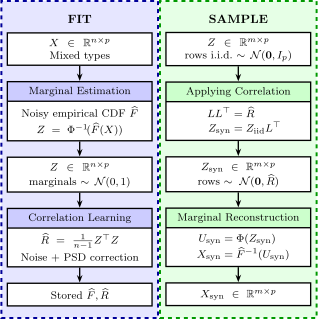
An overview of the NPGC fit and sample procedures is shown in Fig. 3. The model consists of two components: privatized empirical marginals and a Gaussian copula correlation matrix. The fit phase estimates these quantities in a latent Gaussian space, and the sample phase generates correlated Gaussian draws followed by inverse marginal reconstruction to produce synthetic data. Details of the computational complexity for the fit and sample procedures are provided in Appendix B.1.
4. EXPERIMENTAL SETUP
The datasets reflect heterogeneous tabular structure, varying in sample size from \(n=649\) to \(n>45{,}000\) and in dimensionality from \(p=4\) to \(p=36\), with mixtures of continuous, discrete, and categorical variables and missing values in several cases. We do not impose a theoretical minimum sample size. Robustness to dataset size is assessed empirically across benchmarks ranging from \(n=625\) to \(n>45{,}000\) (Table 1). NPGC maintains stable performance across this range, including the smallest dataset (\(n=649\)), without dataset-specific tuning. For each dataset, we generate a synthetic dataset of size equal to the training partition (\(m=0.8n\)). Each dataset is split once into fixed 80/20 train–holdout partitions, following standard practice, for fidelity and privacy evaluation. For utility, a separate 70/30 split is used for Train-on-Synthetic, Test-on-Real (TSTR) evaluation, as downstream classifier evaluation benefits from a larger test partition; both partitions use a predefined random seed. Synthetic samples are generated from the training split only. The holdout set is never used for model fitting and remains fixed across regeneration iterations.
We evaluate NPGC against four baseline models implemented using the Synthetic Data Vault (SDV) single-table synthesizers [34], selected to represent the main classes in tabular data synthesis: parametric copula models (PGC) [44], deep generative models (CTGAN, TVAE) [54, 53], and hybrid approaches (Copula-GAN). Baselines provide a consistent basis for comparison within the SDV framework, covering the main modeling paradigms used in tabular synthesis and enabling evaluation across parametric, deep learning, and hybrid approaches. Future work may evaluate NPGC against more recent tabular synthesis methods. Experiments are conducted on the benchmark datasets summarized in Table 1, obtained from the UCI Machine Learning Repository [11].
We evaluate synthetic data quality using three standard criteria,fidelity, utility, and privacy, following established practice [49]. In addition, we introduce a regeneration stability protocol that measures robustness under iterative synthetic feedback.
Fidelity measures agreement between the statistical structure of real and synthetic data. It is quantified using the SD Metrics single-table Quality Report [34], summarized by the Overall Score, defined as the arithmetic mean of the report’s univariate and bivariate components: Column Shapes (univariate distribution agreement, including Kolmogorov–Smirnov comparisons for numerical variables) and Column Pair Trends (pairwise relationship preservation). These scores lie in \([0,1]\), with 1 indicating perfect agreement under the SDMetrics definitions.
Privacy refers to protecting sensitive information in the original dataset and preventing the synthetic output from enabling re-identification attacks (e.g., linkage, inference, or membership attacks). In this work, privacy is evaluated using Discriminator AUC and Distance to Closest Record (DCR) Share [34]. Discriminator AUC is computed by training a binary classifier solely for evaluation to distinguish real from synthetic samples and measuring the area under the receiver operating characteristic curve. DCR Share quantifies proximity between synthetic and real records based on nearest-neighbor distances. Both metrics are bounded in \([0,1]\), and values closer to 0.5 indicate lower separability and reduced memorization risk.
Utility refers to how fit for use the synthetic dataset is for the intended analytic task. In this work, utility is evaluated using the Train-on-Synthetic, Test-on-Real (TSTR) protocol together with runtime measurements. An XGBoost classifier [5] (fixed random seed, default hyperparameters) is trained on synthetic data and evaluated on real data using classification accuracy. We select XGBOOST as a baseline for TSTR due to its strong performance, robustness to heterogeneous feature types, and widespread use in educational data mining. Future work may evaluate utility across a broader set of predictive models. Accuracy is bounded in \([0,1]\), with higher values indicating better predictive performance. Performance is compared to a classifier trained on real data under the same split, and relative degradation (Accuracy Drop) is reported. Training time denotes synthesizer fitting time, and evaluation time denotes synthetic sample generation time.
Regeneration stability measures preservation of fidelity under repeated Synthetic Feedback Loop (SFL) iterations. It is evaluated using a 10-step synthetic feedback protocol on the Adult dataset [2]. At each iteration, the model is reinitialized and retrained on the synthetic dataset generated at the previous generation. Let \(S^{(k)}\) denote the synthetic dataset generated at iteration \(k\) under SFL. Regeneration stability is defined as the preservation of the Overall Score between \(S^{(k)}\) and the original real dataset across \(k=1,\dots ,10\).
5. RESULTS
We evaluate NPGC against four baseline models across the five benchmark datasets described in Section 4. Results are reported for fidelity, utility, privacy, and regeneration stability and are averaged across all datasets (one aggregate score per dataset).

5.1 Fidelity
Fidelity measures how closely the synthetic data matches the statistical structure of the real data. In practice, higher fidelity indicates that summary statistics and distributions remain consistent between real and synthetic datasets. As shown in Table 2, NPGC achieves the highest Overall Score (0.962), as well as the highest Column Shapes score (0.985) and Column Pair Trends score (0.939). These results indicate that NPGC consistently outperforms all baselines in fidelity across both univariate and pairwise correlation preservation.
| Model | Overall Score | Column Shapes | Pair Trends |
|---|---|---|---|
| NPGC | 0.962 | 0.985 | 0.939 |
| CTGAN | 0.895 | 0.918 | 0.872 |
| Copula-GAN | 0.888 | 0.914 | 0.863 |
| PGC | 0.897 | 0.913 | 0.881 |
| TVAE | 0.832 | 0.883 | 0.781 |
Figure 4 compares the marginal distribution of the Admission grade variable in the Student Dropout Success [30] dataset. The Copula-GAN collapses the distribution into a narrow spike near \(x\approx 177.8\), indicating incorrect assumptions. PGC produces a unimodal approximation that does not capture the non-standard structure of the real data. NPGC consistently reproduces the empirical marginal.
5.2 Privacy
Privacy measures the extent to which individual records from the real dataset are protected. In practice, stronger privacy indicates a lower risk of distinguishing or linking synthetic samples to real individuals. As shown in Table 3, NPGC achieves the lowest Discriminator AUC (0.801) and DCR Share (0.527). Since values closer to 0.5 indicate lower separability and memorization, NPGC provides the strongest privacy performance among all methods.
| Model | Discriminator AUC | DCR Share |
|---|---|---|
| NPGC | 0.801 | 0.527 |
| CTGAN | 0.853 | 0.567 |
| Copula-GAN | 0.871 | 0.558 |
| PGC | 0.850 | 0.549 |
| TVAE | 0.910 | 0.545 |
5.3 Utility
Utility measures how useful the synthetic data is for downstream tasks. In practice, this reflects whether models trained on synthetic data behave similarly when applied to real data. Tables 4 and 5 show that TVAE attains the lowest accuracy drop (8.66%), while NPGC achieves a competitive drop of 16.99%, outperforming CTGAN and Copula-GAN and providing stronger privacy guarantees than TVAE.
| Model | Synthetic Score | Accuracy Drop (%) |
|---|---|---|
| NPGC | 0.739 | 16.99 |
| CTGAN | 0.619 | 25.73 |
| Copula-GAN | 0.647 | 22.80 |
| PGC | 0.675 | 17.04 |
| TVAE | 0.797 | 8.66 |
Training times differ substantially: CTGAN and Copula-GAN exceed 790 seconds, TVAE requires 268 seconds, PGC 11.86 seconds, and NPGC 0.65 seconds. Sampling times are below 1.2 seconds for all methods. NPGC, as a non-deep-learning model, achieves orders-of-magnitude speedups over deep learning baselines and remains substantially faster than the PGC baseline.
5.4 Regeneration Stability
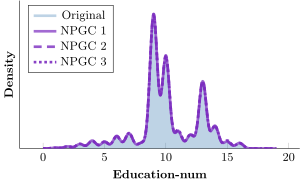
Regeneration stability measures how well the synthetic data preserves its fidelity under repeated generation. In practice, this indicates whether the data maintains its variability and distribution across iterations. Regeneration stability is evaluated only on the Adult [2] dataset using the 10-step synthetic feedback protocol described in Section 4. As shown in Fig. 5, we observe the marginal distribution of the Education-num variable across successive NPGC iterations. NPGC correctly preserves the multi-modal empirical marginal distribution across iterations with minimal drift by construction, illustrating the absence of model collapse under repeated regeneration.

This marginal stability is reflected in the aggregate fidelity metric. As shown in Fig. 6, NPGC Overall Score decreases from 96.43% at iteration 1 to 95.27% at iteration 10 (1.16 percentage points). Copula-GAN decreases from 88.93% to 49.25%, CTGAN from 86.31% to 57.38%, TVAE from 89.33% to 65.56%, and PGC from 84.53% to 78.69%. These results show that NPGC maintains marginal and bivariate structure (as captured by the Overall Score) under repeated regeneration, while alternative methods exhibit substantial degradation.

6. EDUCATIONAL RESEARCH APPLICATION
We evaluate NPGC in an applied setting using engineer-generated test interaction logs from Assignable, the OpenStax homework platform that records student activity using the Experience API (xAPI) standard. The platform organizes student work hierarchically: each assignment contains several activities, and assessment activities contain individual assessment-questions. We analyze the activity layer only. Each Assessment is therefore counted as a single event, regardless of how many questions it contains. This yields 1,509 test interactions spanning four activity types: Reading, Assessment, Ancillary, and AI Feature (see Appendix A for definitions).
| Model | Train Time (s) | Eval Time (s) |
|---|---|---|
| NPGC | 0.650 | 1.19 |
| CTGAN | 821.01 | 0.68 |
| Copula-GAN | 791.90 | 0.75 |
| PGC | 11.860 | 1.03 |
| TVAE | 268.46 | 0.34 |
The empirical distribution is severely imbalanced: Assessment events account for 72.1% of records, Reading for 26.0%, Ancillary for 1.2%, and AI Feature for 0.7%. Such an imbalance is characteristic of educational interaction data, where dominant activity types vastly outnumber emerging or supplementary ones. Standard synthesis methods often collapse low-frequency categories under this regime, precisely the ones most relevant for studying new or rare student behaviors. We apply NPGC to generate 1,982 augmented synthetic records.
Figure 7 compares activity-type proportions between the test and synthetic datasets. NPGC preserves all four proportions to within roughly one percentage point, including AI Feature at 0.81% in the synthetic data versus 0.73% in the test data. The 11 test AI-Feature events are reflected as 16 synthetic events at matched relative frequency, demonstrating that empirical anchoring preserves rare-class structure even under aggressive class imbalance.
7. DISCUSSION
Our results carry several implications for synthetic data practice in educational research. We organize this discussion around three themes: what NPGC’s marginal preservation means for analytic validity, what its limitations imply for specific research designs, and what directions would most benefit the EDM community.
Safeguarding Rare Educational Signals. When synthesizers smooth multi-modal distributions or collapse low-frequency categories, as Copula-GAN and CTGAN did across benchmarks, the distortion is not evenly distributed. Rare subgroups are disproportionately affected: sparsely observed demographic categories, low-frequency event types, and tail behaviors are attenuated first. In educational datasets, these are often the populations of greatest analytic interest: underrepresented students, rare help-seeking behaviors, or atypical learning trajectories. NPGC’s empirical anchoring preserves these distributional features by construction, reducing the risk that synthetic data silently erases the students/researchers who most need to study. Our case study (Section 6) illustrates this concretely: NPGC maintained the categorical proportions of a severely imbalanced activity-type distribution, including AI-feature events occurring in fewer than 1% of records.
The utility-fidelity tradeoff. NPGC achieves the highest fidelity but not the highest downstream classification accuracy; TVAE’s accuracy drop (8.66%) is lower than NPGC’s (16.99%). This gap likely reflects a fundamental tension: strict marginal anchoring constrains the joint distribution in ways that can sacrifice cross-feature predictive signal, particularly nonlinear interactions that deep generators capture through flexible function approximation. However, for many EDM use cases such as population characterization, distributional auditing, subgroup representation analysis, and descriptive reporting, marginal fidelity matters more than predictive utility. These differences have direct implications for common EDM tasks. In descriptive analyses, higher fidelity means that distributions of variables such as grades, activity counts, or demographic proportions remain consistent, so reported statistics do not change when using synthetic data. In predictive settings, comparable TSTR performance means that models trained on synthetic data behave similarly when evaluated on real data. For tasks such as dropout prediction or early warning systems, this reduces the risk that model outputs or intervention thresholds shift due to artifacts introduced during synthesis. Researchers should select their synthesizer based on their analytic objective.
Limitations and scope conditions. The Gaussian copula captures linear dependence structure in the latent space. Educational data frequently exhibits threshold effects, ceiling and floor artifacts, and nonlinear interactions (e.g., between prior knowledge and intervention response) that this assumption may not preserve. Additionally, our regeneration stability analysis was conducted on a single dataset; whether these properties generalize to high-cardinality educational features (e.g., course IDs or learning objective codes) remains an open question.
8. FUTURE DIRECTIONS
The most impactful extensions would address structures common in educational research: longitudinal panel data with temporal dependencies, multi-table relational schemas (students × courses × assessments), and conditional distributions relevant to causal inference in platform A/B experiments. Integrating flexible dependency models, such as vine copulas [8] or neural spline flows [12], while retaining empirical marginal anchoring could extend NPGC’s applicability to these richer data structures without sacrificing its core marginal stability and reproducibility guarantees. Future work may also provide a more precise characterization of the dependency structures captured by the model, evaluate NPGC against more recent tabular synthesizers, and assess utility across a broader range of predictive models.
ACKNOWLEDGMENTS
This research is supported by the National Science Foundation under Award No. 2153481. We thank Dr. Jack Strelich and Dante Soares for their support in understanding the platform data.
APPENDIX
A. OPENSTAX ONLINE INSTRUCTIONAL SYSTEM
The OpenStax platform delivers digital instructional content and assessments to middle-school and post-secondary learners, recording fine-grained student interactions as timestamped Experience API (xAPI) statements.
This paper uses full xAPI logs of example data generated during
quality assurance tests of the system containing 7,506 records at
three levels: assignment (the top-level container), activity
(what the student engages with inside an assignment),
and assessment-question (an individual question inside an
assessment). We analyze the activity level only, yielding 1,509
records across four activity_type categories: Reading (reading),
interaction with instructional content such as textbook
pages; Assessment (assessment), initiation of a practice or
formative evaluation; Ancillary (ancillary), access to
supplemental materials such as videos or external references;
and AI Feature (promptly:preset), an AI chatbot feature
currently under development. Each Assessment is counted
as a single event; the questions inside it are not counted
separately. The empirical distribution is highly imbalanced.
Assessment accounts for \(\sim \)72% of records and AI-feature for
under 1%, which poses challenges for generative methods
that rely on parametric density assumptions or adversarial
training.
Using the dataset’s training split, we apply NPGC to generate 1,982 synthetic interaction records: 1,449 Assessment, 490 Reading, 27 Ancillary, and 16 AI-feature events, with proportional agreement to the original distribution and preservation of both dominant and low-frequency categories. Because NPGC operates on an aggregated tabular structure rather than reproducing individual-level sequences, the released synthetic data preserves categorical frequency structure while mitigating identity disclosure risk, supporting release for educational research under privacy constraints.
B. BASELINE HYPERPARAMETERS
All baseline models were implemented using the SDV single-table synthesizers. Unless otherwise specified, default SDV hyperparameters were used without additional tuning.
Parametric Gaussian Copula (PGC) models each numeric column using a specified parametric family and couples variables through a Gaussian copula correlation structure. The settings below indicate the default numeric marginal family and two post-processing constraints: whether generated values are clipped to the observed range and whether numeric outputs are rounded to match discrete-valued columns.
| Parameter | Value |
|---|---|
| Default numerical distribution | beta |
| Enforce min/max values | True |
| Enforce rounding | True |
Copula-GAN applies a copula-based transformation and then trains a GAN to model dependencies in the transformed space. The hyperparameters below define the training budget (epochs, batch size), representation size (embedding dimension), network capacity (hidden layer sizes), optimizer step sizes (learning rates), discriminator update policy (steps), and the PAC setting (number of samples packed per discriminator input). The last two options enforce range clipping and rounding during post-processing to better match the original data domain.
| Parameter | Value |
|---|---|
| Epochs | 300 |
| Batch size | 500 |
| Embedding dimension | 128 |
| Generator hidden dimensions | (256, 256) |
| Discriminator hidden dimensions | (256, 256) |
| Generator learning rate | \(2\times 10^{-4}\) |
| Discriminator learning rate | \(2\times 10^{-4}\) |
| Discriminator steps | 1 |
| PAC | 10 |
| Enforce min/max values | True |
| Enforce rounding | True |
CTGAN is a conditional GAN designed for mixed continuous and categorical tabular data. The hyperparameters below specify the training budget (epochs, batch size), embedding size for conditional vectors and categorical representations, generator/discriminator capacity (hidden dimensions), optimizer step sizes (learning rates), discriminator update policy (steps per generator update), and PAC packing. As above, min/max enforcement clips generated values to the observed range and rounding enforces discrete-valued outputs where applicable.
| Parameter | Value |
|---|---|
| Epochs | 300 |
| Batch size | 500 |
| Embedding dimension | 128 |
| Generator hidden dimensions | (256, 256) |
| Discriminator hidden dimensions | (256, 256) |
| Generator learning rate | \(2\times 10^{-4}\) |
| Discriminator learning rate | \(2\times 10^{-4}\) |
| Discriminator steps | 1 |
| PAC | 10 |
| Enforce min/max values | True |
| Enforce rounding | True |
TVAE is a variational autoencoder for tabular data. The hyperparameters below specify the training budget (epochs), latent/embedding size, encoder (compression) and decoder (decompression) layer widths, the strength of L2 regularization, and the loss weighting factor used in SDV’s implementation. Min/max enforcement clips outputs to the observed range, and rounding enforces discrete-valued outputs where applicable.
| Parameter | Value |
|---|---|
| Epochs | 300 |
| Embedding dimension | 128 |
| Compression layers | (128, 128) |
| Decompression layers | (128, 128) |
| L2 regularization scale | \(1\times 10^{-5}\) |
| Loss factor | 2 |
| Enforce min/max values | True |
| Enforce rounding | True |
NPGC is a nonparametric Gaussian copula synthesizer. The entries below summarize the privacy level used in experiments (the DP budget \(\epsilon \)) and the modeling choices: no neural optimization, empirical (nonparametric) marginal anchoring, and dependence captured through a Gaussian copula correlation matrix.
| Parameter | Value |
|---|---|
| Differential privacy parameter (\(\epsilon \)) | 1.0 |
| Neural optimization | None |
| Marginal modeling | Empirical |
| Dependency modeling | Gaussian copula relation |
B.1 Computational Complexity
Let \(n\) denote the number of rows in the training data and \(p\) the number of columns. For sampling, let \(m\) denote the number of generated rows. The computational cost of the non-parametric Gaussian copula synthesizer can be separated into the fitting stage and the sampling stage.
Fitting complexityThe algorithm learns the marginal distributions for each
column and then estimates the latent Gaussian correlation
matrix. For each of the \(p\) columns, the marginal-learning
step requires sorting or equivalent ranking/uniqueness
operations on up to \(n\) observations, yielding a cost of order \(O(n \log n)\)
per column. Across all columns, this contributes \(O(pn\log n).\) After
transforming the data into the latent Gaussian space, the
empirical correlation matrix is computed from a matrix of size
\(n \times p\), which costs \(O(np^2).\) When differential privacy is enabled, the
noisy correlation matrix is projected onto the cone of valid
correlation matrices through an eigen-decomposition, which
costs \(O(p^3).\) Therefore, the overall complexity of fit() is
when privacy is enabled, and \(O\!\left (pn\log n + np^2\right )\) when the correlation-repair step is skipped. Sampling complexity
The algorithm first generates an independent Gaussian
matrix of size \(m \times p\), which costs \( O(mp). \) It then applies the learned
correlation structure using a Cholesky factorization of the \(p \times p\)
correlation matrix. Computing the factorization costs \( O(p^3), \) and
multiplying the sampled Gaussian matrix by the Cholesky
factor \( O(mp^2). \) Finally, each column is transformed back through its
inverse empirical CDF. For continuous and categorical
variables, this step is typically linear in the number of
generated samples, contributing approximately \( O(mp) \) overall. Hence,
the typical complexity of sample() is
There is, however, an important exception for integer-valued variables when minimum and maximum values are enforced. In that case, the inverse transformation compares each generated value against all unique observed integer levels. If a column has \(u_j\) unique integer values, then this step costs \( O(mu_j). \) In the worst case, \(u_j = O(n)\), so a single integer-valued column may require \( O(mn). \) If \(m=n\), this becomes \( O(n^2). \) Thus, while sampling is usually cheaper than fitting, high-cardinality integer columns can make the sampling stage substantially more expensive in the worst case. Memory complexity
The memory requirements can also be separated into the fitting
and sampling stages. During fitting, the algorithm stores the
latent Gaussian matrix \(Z \in \mathbb {R}^{n \times p}\), which requires \( O(np) \) memory. It also stores
the correlation matrix, which requires \( O(p^2), \) and the learned marginal
information. For numeric variables, the fitted model stores the
sorted observed values for each column; across all columns, this
requires \( O(np) \) memory in the worst case. Categorical counts and metadata contribute at most lower-order terms relative to
this. Therefore, the overall memory complexity of fit() is
Sampling memoryDuring sampling, the algorithm stores the independently
generated Gaussian samples, the correlated Gaussian samples,
and the final synthetic table, each of size \(m \times p\). Although these
objects may coexist temporarily, their combined memory usage
remains \( O(mp) \) up to constant factors. The learned correlation matrix
again requires \( O(p^2) \) memory. Hence, the typical memory complexity
of sample() is \( O(mp + p^2). \)
Integer-valued columnsAs with runtime complexity, integer-valued columns can
increase memory usage. When minimum and maximum values
are enforced, the inverse mapping step forms a temporary
pairwise difference matrix between the generated values and all
unique observed integer levels. If column \(j\) has \(u_j\) unique integer
values, this temporary array requires \( O(mu_j) \) memory. In the worst
case, \(u_j = O(n)\), so one such column may require \( O(mn) \) additional memory.
Therefore, the worst-case memory complexity of sample()
becomes
REFERENCES
- S. Alemohammad, J. Casco-Rodriguez, L. Luzi, A. I. Humayun, H. Babaei, D. LeJeune, A. Siahkoohi, and R. Baraniuk. Self-consuming generative models go MAD. In International Conference on Learning Representations, 2024.
- B. Becker and R. Kohavi. Adult. UCI Machine Learning Repository, 1996.
- F. Benali, D. Bodénès, N. Labroche, and C. de Runz. MTCopula: Synthetic complex data generation using copula. In International Workshop on Design, Optimization, Languages and Analytical Processing of Big Data (DOLAP), pages 51–60, 2021.
- V. Borisov, K. Sessler, T. Leemann, M. Pawelczyk, and G. Kasneci. Language models are realistic tabular data generators. In International Conference on Learning Representations, 2023.
- T. Chen and C. Guestrin. XGBoost: A scalable tree boosting system. In International Conference on Knowledge Discovery and Data Mining, pages 785–794, 2016.
- P. Cortez. Student Performance. UCI Machine Learning Repository, 2008.
- C. Czado. Pair-copula constructions of multivariate copulas. In Copula Theory and Its Applications, pages 93–109. Springer, 2010.
- C. Czado and T. Nagler. Vine copula based modeling. Annual Review of Statistics and Its Application, pages 453–477, 2022.
- P. J. Danaher and M. S. Smith. Modeling multivariate distributions using copulas: Applications in marketing. Marketing Science, pages 4–21, 2010.
- H. Du, S. Liu, L. Zheng, Y. Cao, A. Nakamura, and L. Chen. Privacy in fine-tuning large language models: Attacks, defenses, and future directions. In Advances in Knowledge Discovery and Data Mining, pages 326–344. Springer, 2025.
- D. Dua and C. Graff. Uci machine learning repository, 2017. University of California, Irvine, School of Information and Computer Sciences.
- C. Durkan, A. Bekasov, I. Murray, and G. Papamakarios. Neural spline flows. In Advances in Neural Information Processing Systems, 2019.
- C. Dwork, F. McSherry, K. Nissim, and A. Smith. Calibrating noise to sensitivity in private data analysis. In Theory of Cryptography, pages 265–284. Springer, 2006.
- Y. Feng, E. Dohmatob, P. Yang, F. Charton, and J. Kempe. Beyond model collapse: Scaling up with synthesized data requires reinforcement. arXiv:2406.07515, 2024.
- A. Goldfarb and C. Tucker. Privacy and innovation. Innovation Policy and the Economy, 12:65–90, 2012.
- I. J. Goodfellow, J. Pouget-Abadie, M. Mirza, B. Xu, D. Warde-Farley, S. Ozair, A. Courville, and Y. Bengio. Generative adversarial nets. In Advances in Neural Information Processing Systems, 2014.
- A. Haim, R. Gyurcsan, C. Baxter, S. T. Shaw, and N. T. Heffernan. How to open science: Debugging reproducibility within the Educational Data Mining conference. In International Conference on Educational Data Mining, pages 114–124, 2023.
- A. Haim, S. Shaw, and N. Heffernan. How to open science: A principle and reproducibility review of the learning analytics and knowledge conference. In International Learning Analytics and Knowledge Conference, pages 156–164, 2023.
- L. Hansen, N. Seedat, M. van der Schaar, and A. Petrovic. Reimagining synthetic tabular data generation through data-centric AI: A comprehensive benchmark. In Advances in Neural Information Processing Systems, pages 33781–33823, 2023.
- J. Ho, A. Jain, and P. Abbeel. Denoising diffusion probabilistic models. In Advances in Neural Information Processing Systems, 2020.
- H. Joe. Dependence modeling with copulas. Chapman and Hall/CRC, 2014.
- J. Kim, C. Lee, and N. Park. STaSy: Score-based tabular data synthesis. In International Conference on Learning Representations, 2023.
- G. C. N. Kindji, L. M. Rojas-Barahona, E. Fromont, and T. Urvoy. Tabular data generation models: An in-depth survey and performance benchmarks with extensive tuning. Neurocomputing, 2025.
- M. Klose, V. Desai, Y. Song, and E. Gehringer. EDM and privacy: Ethics and legalities of data collection, usage, and storage. In International Conference on Educational Data Mining, 2020.
- Y. Kossale, M. Airaj, and A. Darouichi. Mode collapse in generative adversarial networks: An overview. In International Conference on Optimization and Applications, pages 1–6, 2022.
- A. Kotelnikov, D. Baranchuk, I. Rubachev, and A. Babenko. TabDDPM: Modelling tabular data with diffusion models. In International Conference on Machine Learning, 2023.
- A. D. Lautrup, T. Hyrup, A. Zimek, and P. Schneider-Kamp. Systematic review of generative modelling tools and utility metrics for fully synthetic tabular data. ACM Computing Surveys, 2024.
- C. Lee, J. Kim, and N. Park. CoDi: Co-evolving contrastive diffusion models for mixed-type tabular synthesis. In International Conference on Machine Learning, 2023.
- H. Li, L. Xiong, and X. Jiang. Differentially private synthesization of multi-dimensional data using copula functions. In International Conference on Extending Database Technology, pages 475–486, 2014.
- M. V. Martins, D. Tolledo, J. Machado, L. M. T. Baptista, and V. Realinho. Early prediction of student’s performance in higher education: A case study. In Trends and Applications in Information Systems and Technologies, pages 166–175, 2021.
- T. Meng, N. Mehrabi, P. Goyal, A. Ramakrishna, A. Galstyan, R. Zemel, K.-W. Chang, R. Gupta, and C. Peris. Attribute controlled fine-tuning for large language models: A case study on detoxification. Association for Computational Linguistics, pages 13329–13341, 2024.
- M. Olave, V. Rajkovic, and M. Bohanec. Nursery. UCI Machine Learning Repository, 1989.
- M. Othus and Y. Li. A Gaussian copula model for multivariate survival data. Statistics in Biosciences, pages 154–179, 2010.
- N. Patki, R. Wedge, and K. Veeramachaneni. The synthetic data vault. In International Conference on Data Science and Advanced Analytics, pages 399–410, 2016.
- T. Phung, V.-A. Pădurean, A. Singh, C. Brooks, J. P. Cambronero, S. Gulwani, A. K. Singla, and G. Soares. Automating human tutor-style programming feedback: Leveraging GPT-4 tutor model for hint generation and GPT-3.5 student model for hint validation. In International Learning Analytics and Knowledge Conference, pages 12–23, 2024.
- Z. Qian, B.-C. Cebere, and M. van der Schaar. Synthcity: Facilitating innovative use cases of synthetic data in different data modalities. arXiv:2301.07573, 2023.
- J. P. Reiter. Releasing multiply imputed, synthetic public use microdata: An illustration and empirical study. Journal of the Royal Statistical Society: Series A (Statistics in Society), pages 185–205, 2004.
- J. P. Restrepo, J. C. Rivera, H. Laniado, P. Osorio, and O. A. Becerra. Nonparametric generation of synthetic data using copulas. Electronics, page 1601, 2023.
- T. Sattarov, M. Schreyer, and D. Borth. FinDiff: Diffusion models for financial tabular data generation. In International Conference on AI in Finance, pages 64–72, 2023.
- Y. Shi, K. Yu, Y. Dong, and F. Chen. Large language models in education: A systematic review of empirical applications, benefits, and challenges. Computers and Education: Artificial Intelligence, 2026.
- I. Shumailov, Z. Shumaylov, Y. Zhao, N. Papernot, R. Anderson, and Y. Gal. AI models collapse when trained on recursively generated data. Nature, pages 755–759, 2024.
- R. Shwartz-Ziv and A. Armon. Tabular data: Deep learning is not all you need. Information Fusion, pages 84–90, 2022.
- R. Siegler. Balance Scale. UCI Machine Learning Repository, 1976.
- A. Sklar. Fonctions de répartition à n dimensions et leurs marges. Publications de l’Institut de Statistique de l’Université de Paris, 8:229–231, 1959.
- J. Sohl-Dickstein, E. Weiss, N. Maheswaranathan, and S. Ganguli. Deep unsupervised learning using nonequilibrium thermodynamics. In International Conference on Machine Learning, 2015.
- X.-K. P. Song. Multivariate dispersion models generated from Gaussian copula. Scandinavian Journal of Statistics, pages 305–320, 2000.
- A. Srivastava, L. Valkov, C. Russell, M. U. Gutmann, and C. Sutton. VEEGAN: Reducing mode collapse in GANs using implicit variational learning. In Advances in Neural Information Processing Systems, volume 30, 2017.
- M. C. Stoian, S. Dyrmishi, M. Cordy, T. Lukasiewicz, and E. Giunchiglia. How realistic is your synthetic data? constraining deep generative models for tabular data. In International Conference on Learning Representations, 2024.
- M. C. Stoian, E. Giunchiglia, and T. Lukasiewicz. A survey on tabular data generation: Utility, alignment, fidelity, privacy, and beyond. arXiv:2503.05954, 2025.
- N. Suh, X. Lin, D.-Y. Hsieh, M. Honarkhah, and G. Cheng. AutoDiff: Combining auto-encoder and diffusion model for tabular data synthesizing. arXiv:2310.15479, 2023.
- A. Vaswani, N. Shazeer, N. Parmar, J. Uszkoreit, L. Jones, A. N. Gomez, Ł. Kaiser, and I. Polosukhin. Attention is all you need. In Advances in Neural Information Processing Systems, 2017.
- T. Wiehn. Synthetic data: From data scarcity to data pollution. Surveillance & Society, 22(4):472–476, 2024.
- L. Xu, M. Skoularidou, A. Cuesta-Infante, and K. Veeramachaneni. Modeling tabular data using conditional GAN. In Advances in Neural Information Processing Systems, volume 32, 2019.
- L. Xu, M. Skoularidou, A. Cuesta-Infante, and K. Veeramachaneni. Modeling tabular data using conditional GAN. In Advances in Neural Information Processing Systems, 2019.
- L. Xu and K. Veeramachaneni. Synthesizing tabular data using generative adversarial networks. arXiv:1811.11264, 2018.
- H. Zhang, J. Zhang, Z. Shen, B. Srinivasan, X. Qin, C. Faloutsos, H. Rangwala, and G. Karypis. Mixed-type tabular data synthesis with score-based diffusion in latent space. In International Conference on Learning Representations, 2024.
- Z. Zhao, A. Kunar, R. Birke, and L. Y. Chen. CTAB-GAN: Effective table data synthesizing. In Asian Conference on Machine Learning, pages 97–112, 2021.
- Z. Zhao, A. Kunar, R. Birke, H. Van der Scheer, and L. Y. Chen. CTAB-GAN+: Enhancing tabular data synthesis. Frontiers in Big Data, 2024.
1The synthetic data generation toolkit is available:
https://github.com/gdiaz95/Synthetic_data_generation
© 2026 Copyright is held by the author(s). This work is distributed under the Creative Commons Attribution-NonCommercial-NoDerivatives 4.0 International (CC BY-NC-ND 4.0) license.