ABSTRACT
This research aims to construct a theoretical model of the cognitive maps contributing to astronauts’ academic and professional success. By integrating Interpretative Phenomenological Analysis (IPA) and grounded theory (GT) to identify in-depth sensemaking as well as philosophical patterns within key factors, the researcher conducted nine semi-structured interviews to deepen the inquiry into astronauts’ life-long narratives. The study introduces an original cognitive-mapping model comprising three interlocking systems: the chronosystem, ecosystem, and identity system. It explores how astronauts define pivotal moments, perceive environments, and establish self-identity to succeed in academic study and career development.
To address the analytical challenges of large-scale qualitative data, this study applies a human–AI collaborative approach, through which 92 axial categories and 20 selective themes were identified. Three original frameworks—Heavenly Hour, Terrain Triumph, and Human Harmony—were established, alongside two substantive theories and one emerging middle-range theoretical proposition. The findings further suggest a bicameral theorizing model for human–AI qualitative analysis, in which human interpretive depth and AI-enabled analytical scale converge to support complementary forms of meaning-making and theory construction. To operationalize this process, the researcher developed the GOLDEN Framework, a six-step methodology for ethical and reflexive human–AI collaboration designed to support rigorous analysis of large-scale qualitative data and strengthen synergistic human–AI learning.
Keywords
INTRODUCTION
The contemporary challenges including the biological weapon threats [1, 2], environmental crises, geopolitical tensions [3], and technological shifts driven by AI have contributed to an education crisis [4]: how to guide the current and future generations towards success? Astronauts, as modern-day way finders, with their life experiences and informed decision-making could delineate a cognitive map [5] for navigating educational and social landscapes in an era marked by unprecedented uncertainty. This study examines how astronauts perceive pivotal moments, formative environments, and self-identity, focusing on revealing the underlying factors that enable them to excel in academic study and career development. Using a qualitative approach that combines IPA [6] and GT [7], while IPA grounds the inquiry in the richness of individual lived experience, GT provides the systematic scaffolding to build transferable conceptual patterns across cases, the researcher seeks the shared meanings and emergent conceptual patterns within their lived experience to address the three research questions: to have excelled in academic study and career development, 1) What are astronauts’ pivotal moments? 2) What are the main environmental factors? 3) How do astronauts define their self-identity?
methods
Sampling, Participants, and Data
Purposive sampling method is chosen to conduct semi-structured interviews [8], which allows the deliberate selection of individuals with the specific criteria necessary to address the research questions. The sample consists of nine retired astronauts who have travelled to space. Four astronauts’ lifelong partners also consented to join the project, helping the participant better recall details and strengthen the depth of the conversation by providing crucial relational context. The primary astronaut sample includes female (n=2) and male astronauts (n=7). The average age of total 13 participants (nine astronauts and four partners) is 76. All of the participants were given a pseudonym unless they explicitly gave the consent to use their real names.
A research facilitator supported the recording and transcribing with Voice Recorder & Notes Pro and Adobe Premium Pro for the six in-person interviews. The researcher applied Google Meets, Team Meeting to record and transcribe the three virtual interviews. The average time of each audio-recorded semi-structured interview is 2.56 hours, and the average word count of each transcript is 20,460. Along with the nine formal interviews, the researchers applied reflexive journals to analyze data [9].
Data Analysis
The researcher adopted an iterative human-AI approach to construct meaning not only accurately but also artistically [10], and developed the GOLDEN Framework, acronymed for Ground, Operate, Lead, Deepen, Ethics, and Nature, a six-step ethical and reflexive protocol for qualitative analysis. Figure 1 shows three types of AI tools structurally applied, and Table 1 demonstrates how to operate AI4People Principles across the GOLDEN stages [11]. Across all three works (Heaven Hour, Terrain Triumph, and Human Harmony), data saturation was assessed using theoretical saturation criteria [7] and then using design effect/effective sample size framework [12], paired with Silverman’s [13] data density principles. This dual quantitative–theoretical approach ensures saturation is justified both by demonstrated conceptual closure across axial and selective levels and by statistical sufficiency.
To enhance the credibility of the research, the synthesized member checking in addition to traditional member checking approaches was adopted [14]. As Spall [15] suggests, the researcher invited four experts with knowledge of the research but not participants provide a review of the data collection and analysis to ensure the absence of bias, adding to the study’s validity. To further increase the study’s trustworthiness, three external auditors from diverse professional backgrounds without knowledge of the study are invited to provide an unbiased examination of the findings, interpretations, and conclusions [16].
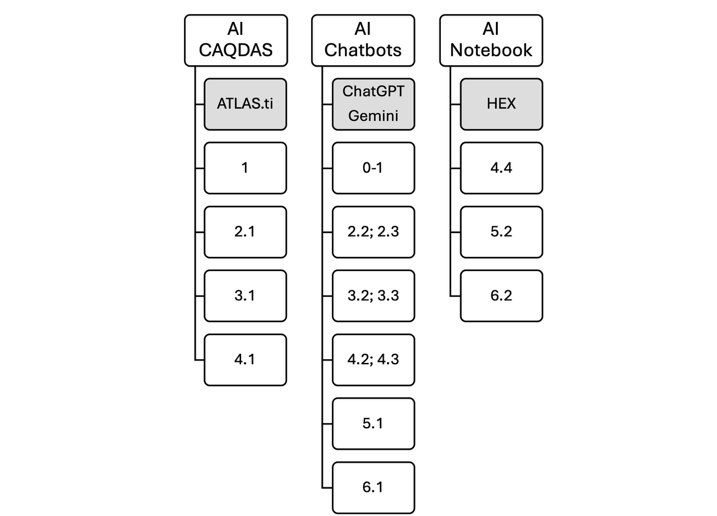
AI4People | Stage | Stage Description |
|---|---|---|
Beneficence | 0-1; 1 | Data Preparation |
Non-maleficence | 2.1 | AI Open Coding |
Autonomy | 2.2 | Human-AI Coding |
Justice | 2.3 | Preliminary Theoretical Structuring |
Non-maleficence | 3.1 | AI Open Coding |
Autonomy | 3.2 | Human-AI Coding |
Explicability | 3.3 | Data Saturation Assessment & Audit Trail Management |
Non-maleficence | 4.1 | AI Open Coding |
Autonomy | 4.2 | Human-AI Coding |
Explicability | 4.3; 4.4 | Data Saturation Confirmation and Consolidation |
Justice | 5.1; 6.1 | Theoretical Framework Alignment and Theoretical Validation |
Beneficence | 5.2; 6.2 | Quantitative Validation |
theoretical background
Having identified the four stages of astronauts’ mental representations, Suedfeld [17] proclaims that space psychology must undoubtedly maintain its concern with predicting, preventing, and countering adverse reactions. To truly understand what space exploration means to those who engage in it, it is necessary to look at how the explorers respond to challenges. This means that the early myths- the formative years of astronauts’ experiences with deliberate decision making are not negligible. Thus, the research applies cognitive maps to seek key decision-making points through a whole-life approach to reflect on how personal needs are satisfied as well as personal values are realized over the life course [18].
Cognitive Mapping
Edward C. Tolman’s pioneering work introduced the concept of cognitive maps - mental representations that individuals develop to understand and navigate their environments [5]. The researcher then integrates the western cognitive mapping theory and the Chinese ancient strategic thoughts to achieve success: Heaven, Earth, and Men.
Heavenly Hour, Terrain Triumph, Human Harmony (HTH Model)
Mencius (c. 372 – 289 B.C.) highlighted the superlative significance of humans in the trio relationship: tiān shí is inferior to terrain triumph, and dì lì is inferior to rén hé. This ideology reflecting the Chinese essential worldview of the interconnectedness of the divine trinity of the universe has been translated and applied in various fields by Western scholars. Lau [19] interpreted, “opportune times are not as good as advantageous terrain; advantageous terrain is not as good as harmonious people.” Van Norden [20] simplified, “The timing is not as important as the terrain, and the terrain is not as important as having unity among the people.” To keep the accuracy as well as fluency, the researcher translated with the simplest version, “Heavenly Hour matters. Terrain Triumph more. Human Harmony most.”
Then the interview protocol was formulated based on the HTH model to explore astronauts’ defining moments, formative environments, and self-identity. Compared to Piaget’s learning stages theory [21] and Vygotsky’s development of learning zones [22], the researcher gives voices to the participants to define their own terms to inform teaching methodologies and education policies for customized plans for each unique individual learner.
Results
Through a rigorously iterative human-AI qualitative analysis from more than 8,751 open codes, the researcher selected 20 emergent themes and refined 92 axial categories across three original theoretical frameworks. Directed by Finlay’s [23] “maps’ of five variants of reflexive activities, the researcher found that comparative analysis of human-refined and AI-generated outcomes reveals a complementary relationship: human sensemaking provides interpretative depth, while algorithmic processing enables indispensable scalability. The findings indicate that human-AI synergistic workflows support effective model for high-volume textual analysis.
Heavenly Hour Framework and Theory
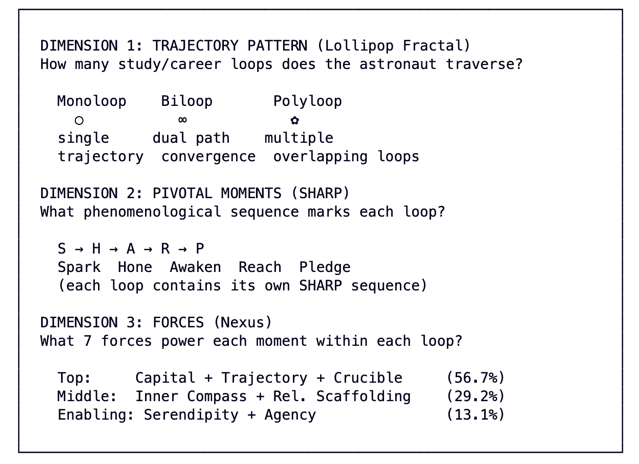
The Heavenly Hour framework encapsulates the five pivotal moments shaping astronauts’ trajectories: spark-ling interest, honing transition, awakening passion, reaching fulfillment, and pledging commitment, acryonymed SHARP. Often honed through military training or rigorous academic disciplines, astronauts demonstrate an exceptional ability to recognize and capitalize on opportune moments, reflecting their cognitive precision, time consciousness, and decisiveness. Figure 2 shows how the human- and AI-based coding result theoretical frameworks exhibiting greater interpretive complementarity in three dimensions.
• MONOLOOP astronauts: Top Tier forces dominate on a single path. Inner Compass is unwavering. Agency appears high because the path is clear.
• BILOOP astronauts: Middle Tier becomes critical because Inner Compass must reconcile two domains. Relational Scaffolding supports the dual commitment. Serendipity often determines which loop becomes primary.
• POLYLOOP astronauts: All seven Nexus forces operate at maximum complexity. Each loop generates its own Capital, Trajectory, and Crucibles, while the Inner Compass integrates across loops. This is where the Enabling Tier becomes most visible: navigating multiple loops requires both luck and deliberate choice.
Terrain Triumph and A Middle-Range Theoretical Proposition
The researcher upgraded Bronfenbrenner’s ecological systems [24] into the ISEE Terrain Triumph framework. ISEE is acryonymed for four ecological systems: the ideological and cultural macrosystem (IDEAL), social and interpersonal mesosystem (SOAP), environment and physical exosystem (EPIC), and emotional and psychological microsystem (EMO). Each system comprises both catalysts and challenges, which yielded eight themes in Terrain Triumph, e.g. EPIC Challenge and EPIC Catalyst. This framework maps out the dynamic interplay between catalysts and their counterparts-challenges, revealing the nuanced progression of astronauts’ diversified life stages.
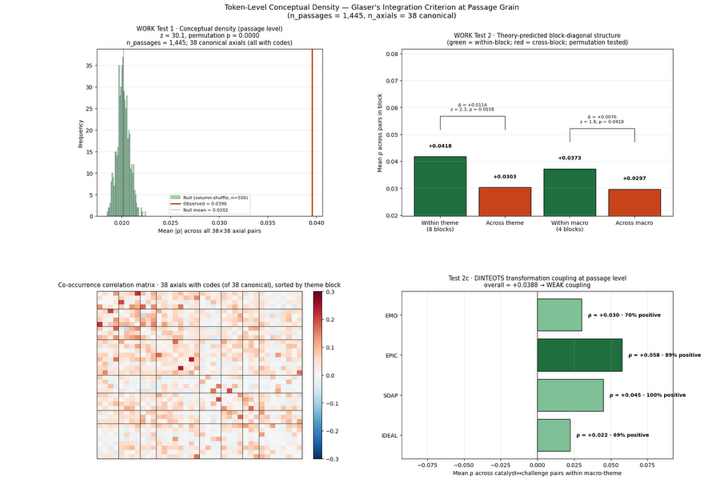
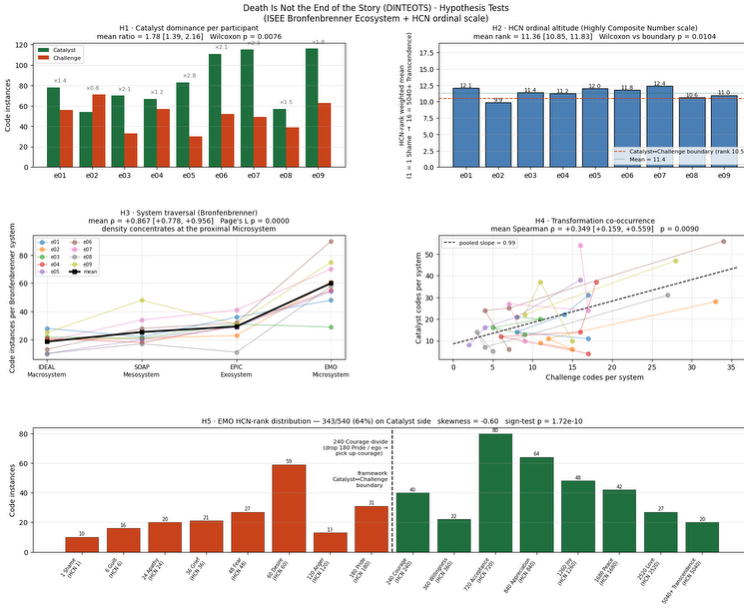
Despite statistical evidenced pass for workability (Figure 3) and hypotheses tests [7] (Figure 4), the researcher suggests a middle-range theory with emerging patterns [25], tentatively termed Death Is Not the End of the Story (DINTEOTS), which characterizes how individuals transform adversity, loss, and challenges into sustained trajectories of growth and meaning-making.
Human Harmony Framework and Theory
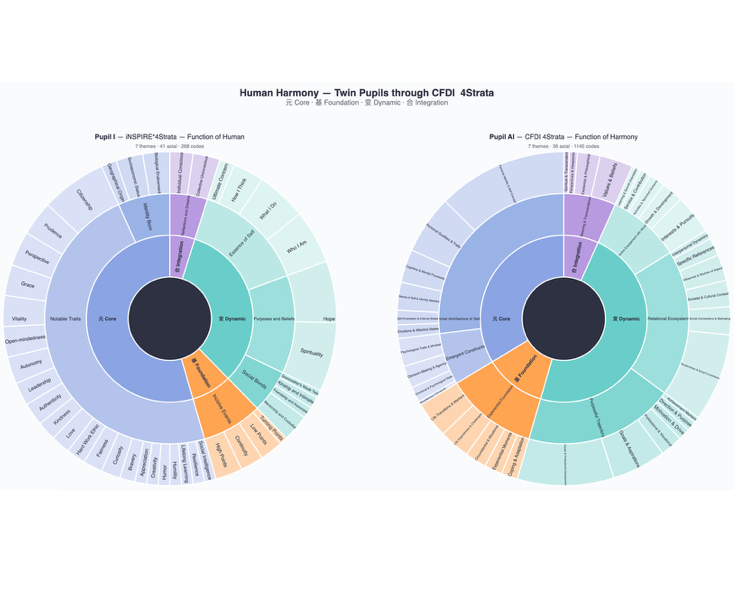
Although the researcher’s seven human-coded themes — acronymed as the iNSPIRE framework — diverge in nomenclature from the seven AI-generated themes, human-AI collaboration revealed a notable convergence of independently derived conceptual structures, lending empirical support to AI's socio-emotional attributes [26]. As illustrated in Figure 5, both codlings organize around a shared four-stratum architecture — 元 Core, 基 Foundation, 变 Dynamic, and 合 Integration — functioning as a common interpretive scaffold across 41 human axial categories (268 refined open codes) and 36 AI axial categories (1,145 initial open codes). AI-generated thematic functions of harmony aligned with the researcher’s human-centered identity framework, yielding two complementary theoretical formulations: a researcher’s reflective All-Mirror-in-One perspective emphasizing unity through mutual interpretation, and the AI-layered 4Strata model describing the operational dynamics of identity across multiple dimensions. This convergence demonstrates how distinct analytic pathways can arrive at shared higher-order abstractions. While human contributions provide philosophical depth and contextual nuance, AI enables empirical rigor through expansive coding, statistical saturation testing, theme-shift quantification, and convergence–divergence metrics.
HTH Model and Bicameral Theorizing
Drawing on Jaynes’s [27] foundational conception of the bicameral mind that cognition operates through two distinct yet interacting chambers, the researcher extends this metaphor into bicameral theorizing, a Human-AI qualitative analytic structure in which researcher-led (I + AI) and AI-surfaced (AI + I) reasoning function as complementary generative modes rather than interchangeable contributions. This bicameral architecture organizes the HTH Model across three frameworks — Heavenly Hour, Terrain Triumph, and Human Harmony — each partitioned into two epistemically distinct halves. The Structural/Locational half anchors identity in its situated, relational, and contextual dimensions, yielding the collaborative constructs Lollipop Fractal, Heart-Land, and All-Mirror-in-One grounded theories. The Transformational/Teleological half orients identity toward purpose, trajectory, and emergent meaning, producing AstroNexus, DINTEOTS, and 4Strata Navigation. This deliberate alternation of analytic authorship across halves reflects a principled division of generative labor.
The overall bicameral structure — structural grounding paired with teleological projection — mirrors the dual functions of identity itself: where one is and where one is becoming. Importantly, the distribution of theorizing labor is not fixed but contingent upon the researcher’s personality, cognitive dispositions, and analytic capabilities. In this study, the researcher’s inclination toward structural and locational reasoning anchored the first half of each framework, while AI’s complementary teleological capacity completed the theorizing arc in Heavenly Hour and Human Harmony. Terrain Triumph, however, illustrates a different configuration: one in which the researcher independently drove the theoretical construction from the ground up, yet AI’s contribution to statistical validation through procedures such as the Work test and hypothesis testing remained integral to substantiating its middle-range theory claim. This suggests that bicameral theorizing functions less as a rigid division of labor and more as a dynamic, researcher-sensitive scaffold whose outcomes reflect the unique epistemic posture each inquirer brings to the analytic encounter.
Framework | Structural/ Locational Half | Transformational/ Teleological Half |
|---|---|---|
Heavenly Hour | Lollipop Fractal (I + AI) | AstroNexus (AI + I) |
Terrain Triumph | Heart-Land (I + AI) | DINTEOTS (I + AI) |
Human Harmony | All-Mirror-in-One (I + AI) | 4Strata Navigation (AI + I) |
Discussion
Resonating with Silver and Lewins’s emphasis on engaging with emerging technology for qualitative analysis [28], this study highlights the irreversibility and uncertainty inherent in intensive analytical processes. It remains an open question whether comparable AI-generated outcomes would have emerged without the researcher’s prior extensive validation of over 8,751 open codes and the subsequent development of theoretical frameworks and grounded theories.
Extending ongoing debates on data saturation [29], this study argues that saturation can be reexamined in light of AI-supported analysis through indicators such as information power, data density comparison, effective sample size, empirical saturation evidence, and methodological precedent. Meanwhile, critical questions remain: to what extent can human-AI collaboration reproduce - or transform - the trajectories of qualitative sensemaking?
In summary, this study underscores the importance of human-first iterative engagement prior to AI integration to preserve methodological rigor and to mitigate risks associated with irreversible analytical decisions [30]. Such considerations point toward a broader rethinking of how human agency, technological augmentation, and epistemic responsibility co-evolve in the future of data-intensive research [31].
REFERENCES
- Lyon, R. F. 2021. The COVID-19 Response Has Uncovered and Increased Our Vulnerability to Biological Warfare, Military Medicine, 186 (7-8) 193-196. DOI= https://doi.org/10.1093/milmed/usab061
- Haddad, H. 2025. Redefining biological weapons in the evolving AI, CRISPR, and Biothreat Landscape, Ethics, Medicine and Public Health, 33, 101176. DOI= https://doi.org/10.1016/j.jemep.2025.101176
- Meshko, H. M., Meshko, O. I., and Habrusieva, N. V. 2023. The impact of the war in Ukraine on the emotional well-being of students in the learning process, Journal of Intellectual Disability Diagnosis and Treatment, 11(1), 55-65. DOI= https://doi.org/10.6000/2292-2598.2023.11.01.7
- Chan, C. K. and Hu, W. 2023. Students’ voices on Generative AI: Perceptions, benefits, and challenges in Higher Education, International Journal of Educational Technology in Higher Education, 20(43). DOI= https://doi.org/10.1186/s41239-023-00411-8
- Tolman, E. C. 1948. Cognitive maps in rats and men, Psychological Review, 55(4), 189-208. DOI= https://psycnet.apa.org/doi/10.1037/h0061626
- Smith, J. A., Jarman, M., and Osborn, M. 1999. Doing interpretative phenomenological analysis, Qualitative health psychology: Theories and Methods, 1(1), 218-240. DOI= https://doi.org/10.4135/9781446217870.n14
- Glaser, B. G. and Strauss, A. L.1967. The discovery of grounded theory: Strategies for qualitative research. Aldine de Gruyter (Trans), Aldine Transaction, United States. DOI= https://doi.org/10.4324/9780203793206
- Guest, G., Bunce, A. and Johnson, L.2006. How Many Interviews Are Enough? An Experiment with Data Saturation and Variability, Field Methods, 18(1), 59-82. DOI= https://doi.org/10.1177/1525822X05279903
- Guba, E.G. and Lincoln, Y.S. 1989. Fourth Generation Evaluation. SAGE Publications.
- Williams, M. and Moser, T. 2019. The art of coding and thematic exploration in qualitative research, International Management Review, 15(1), 45-55.
- Floridi, L., Cowls, J., Beltrametti, M., Chatila, R., Chazerand, P., Dignum, V., Luetge, C., Madelin, R., Pagallo, U., Rossi, F., Schafer, B., Valcke, P., and Vayena, E. 2018. AI4People-An Ethical Framework for a Good AI Society: Opportunities, Risks, Principles, and Recommendations. Minds and machines, 28(4), 689–707. DOI= https://doi.org/10.1007/s11023-018-9482-5
- Kish, L. 1965. Sampling Organizations and Groups of Unequal Sizes. American Sociological Review, 30(4), 564–572. DOI= https://doi.org/10.2307/2091346
- Silverman, B. W. (2018). Density Estimation for Statistics and Data Analysis. (1st ed.). Routledge. DOI= https://doi.org/10.1201/9781315140919
- Birt, L., Scott, S., Cavers, D., Campbell, C., and Walter, F. 2016. Member Checking: A Tool to Enhance Trustworthiness or Merely a Nod to Validation?. Qualitative health research, 26(13), 1802–1811. DOI= https://doi.org/10.1177/1049732316654870
- Spall, S. 1998. Peer debriefing in qualitative research: Emerging operational models. Qualitative inquiry, 4(2), 280-292. DOI= https://doi.org/10.1177/107780049800400208
- Miller, D. L. 1997. One Strategy for Assessing the Trustworthiness of Qualitative Research: Operationalizing the External Audit. DOI= https://eric.ed.gov/?id=ED411268
- Suedfeld, P., Brcic, J., Johnson, P. J., and Gushin, V. 2015. Coping strategies during and after spaceflight: data from retired cosmonauts. Acta Astronautica, 110, 43-49. DOI= https://doi.org/10.1016/j.actaastro.2012.04.039
- Litano, M. L. and Major, D. A. 2015. Facilitating a whole-life approach to career development: the role of organizational leadership, Journal of Career Development, 43(1), 52–65. DOI= https://doi.org/10.1177/0894845315569303
- Mencius. 2003. Mencius (Lau, D. C. Trans), Penguin Classics, London.
- Mencius. 2008. Mengzi with Selections from Traditional Commentaries. (Van Norden, B. W. Trans), Hackett Publishing, Cambridge.
- Piaget, J.1977. The Development of Thought: Equilibration of Cognitive Structures (Rosin, A. Trans), Viking Press, New York.
- Vygotsky, L. S. 1978. Mind in Society: The Development of Higher Psychological Processes, Harvard University Press, Cambridge.
- Finlay, L. 2002. Negotiating the swamp: The opportunity and challenge of reflexivity in research practice, Qualitative Research, 2(2), 209-230. DOI= https://doi.org/10.1177/146879410200200205
- Bronfenbrenner, U. 1979. The Ecology of Human Development: Experiments by Nature and Design, Harvard University Press, United Kingdom.
- Merton, R.K. 1968. Social Theory and Social Structure (Enlarged ed.), The Free Press, New York.
- Kolomaznik, M., Petrik, V., Slama, M., and Jurik, V. (2024). The role of socio-emotional attributes in enhancing human-AI collaboration. Frontiers in Psychology, 15. DOI= https://doi.org/10.3389/fpsyg.2024.1369957
- Jaynes, J. 1976. The Origin of Consciousness in the Breakdown of the Bicameral Mind. Houghton Mifflin. (Reprinted in 1982).
- Silver, C. and Lewins, A. 2014. Using software in qualitative research. SAGE Publications Ltd. DOI= https://doi.org/10.4135/9781473906907
- Wutich, A., Beresford, M., and Bernard, H. R. 2024. Sample Sizes for 10 Types of Qualitative Data Analysis: An Integrative Review, Empirical Guidance, and Next Steps. International Journal of Qualitative Methods, 23. DOI= https://doi.org/10.1177/16094069241296206
- Sunstein, C. R. 2018. Irreparability as Irreversibility, Supreme Court Review, Harvard Public Law Working Paper. DOI= https://ssrn.com/abstract=3113571 or http://dx.doi.org/10.2139/ssrn.3113571
- Teilhard de Chardin, P. 1965. The Phenomenon of Man (with an introd. by Julian Huxley. translation by Bernard Wall), Harper & Row.
© 2026 Copyright is held by the author(s). This work is distributed under the Creative Commons Attribution-NonCommercial-NoDerivatives 4.0 International (CC BY-NC-ND 4.0) license.